
A gentle guide to using essential oils and scent rituals for emotional wellness and daily balance
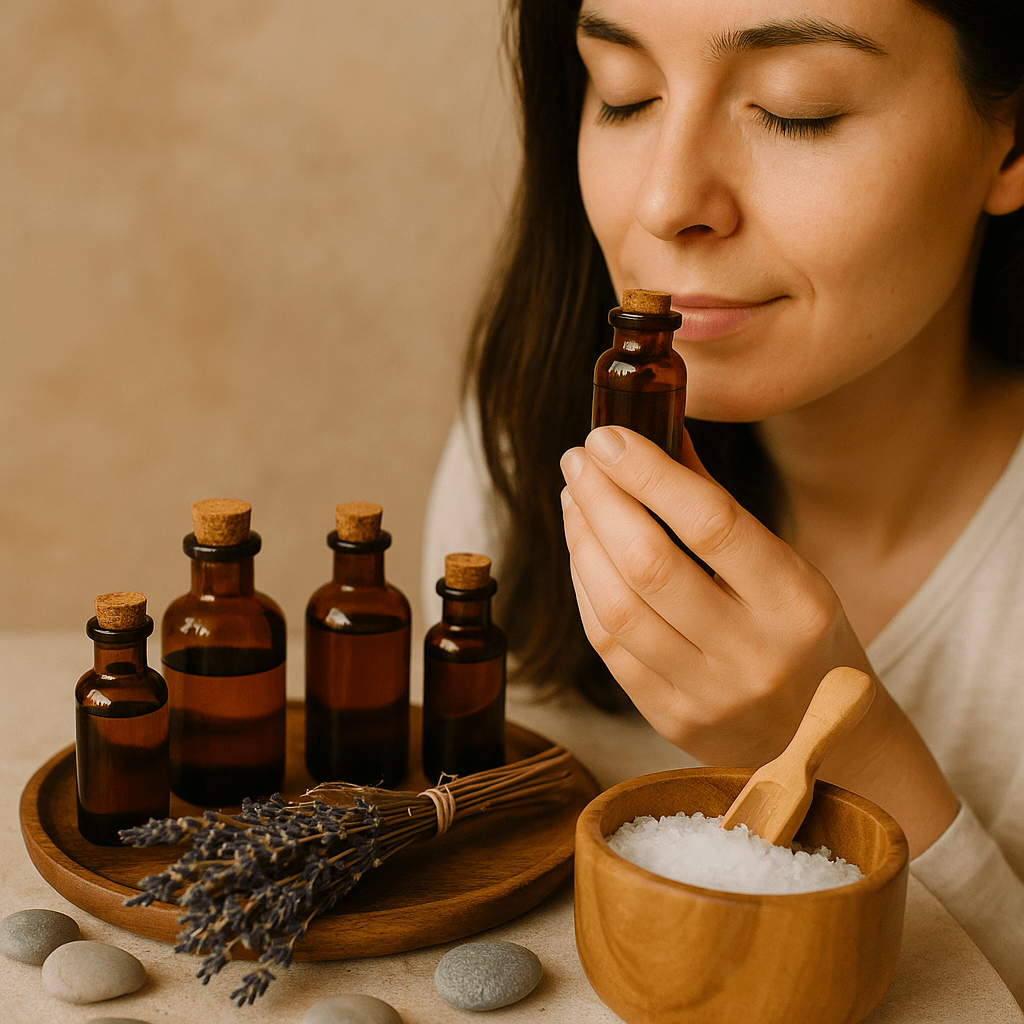
Scent: The Invisible Language of Emotion
Scent is deeply tied to our emotional world. A single whiff can transport you to a forgotten moment, evoke love, calm, or even grief. That’s because our sense of smell is directly connected to the brain’s limbic system – home of memory and emotion.
In aromatherapy, we use essential oils not just for their beautiful fragrances but for how they affect our body, spirit, and mind. Whether you want to energize, relax, uplift, or ground yourself, scent is a subtle but powerful tool.
Mini Ritual: Memory Trough Scent
Here is a small ritual you can try right now.
Close your eyes, soften your shoulders and take a slow, deep breath.
What is a scent from your childhood that brings up a strong feeling?
Let the memory rise — without judgment.
What did it teach you? What does it still hold?
Write it down or sit with it quietly for a few minutes.
My First Memory of Scent: The Rose Candle
I was three years old, spending Christmas with my grandparents in the countryside. I remember my aunt holding a rose-scented candle as we listened to the Christmas mass on the radio. That moment imprinted itself so deeply in my memory that the scent of rose has followed me ever since.
Years later, I still use rose essential oil in rituals, meditations, and ceremonies. For me, the rose represents duality – softness and strength. Its petals are symbols of love and openness, while the thorns remind us of the importance of protection and boundaries.
Aromatherapy 101: How Scent Affects the Brain
When we inhale essential oils, the aromatic molecules travel through the nose and stimulate the olfactory nerves. These nerves connect directly to the amygdala – the part of the brain that processes emotion. That’s why scent can trigger such strong feelings and memories.
This is the foundation of aromatherapy, the practice of using plant-based essential oils for therapeutic benefit. Whether in massage, meditation, or simply diffused through your home, the right aroma can shift your entire mood.
Want to learn more? See resources on scent, the brain, and aromatherapy below.
My Favorite Essential Oils & Their Emotional Benefits
Here are the oils I return to again and again, each one offering something unique:
- Rose – Heart-opening, emotionally nurturing, and spiritually protective. I use it before sessions or during personal reflection.
- Lemon & Citrus Oils – Uplifting and bright. Great for mental clarity and energizing your space. I’ve kept lemon oil on my desk for years—it’s my go-to mood booster.
- Sandalwood – Grounding and spiritually cleansing. Helps reduce stress and enhances meditation. It’s said to affect alpha and theta brain waves, promoting calm and stillness.
- Jasmine – Restorative and joyful. Helps with emotional fatigue and brings in sensual, creative energy.
- Lavender – Calming and versatile. Soothes anxiety and promotes better sleep.
- Tea Tree – Antimicrobial and skin-healing. Useful in first aid and skincare.
- Peppermint – Invigorating and cooling. Helps relieve headaches and clear mental fog.
- Vanilla – Soft and nurturing. Promotes relaxation and emotional comfort.
- Orange (Sweet Orange) – Uplifting, cheerful, and mood-boosting. Helps release tension and brings a sense of lightness and optimism.
How to Use Essential Oils in Everyday Life
There are so many beautiful and simple ways to weave scent into your routine. Here are a few of my favorites:
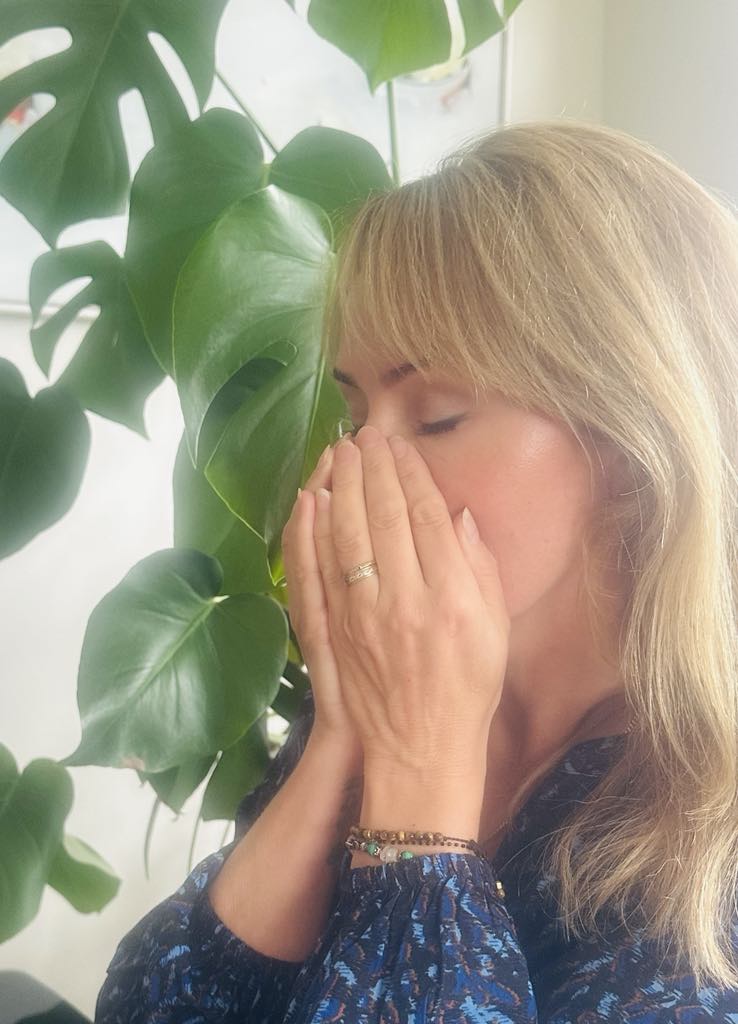
Palm Inhalation
Add 2-3 drops of essential oil to your palms, rub them together, cup over your nose, and take a few deep breaths. This is powerful when you need quick emotional support.
Bath Soak or Foot Bath
Add 5–10 drops of your favorite essential oil directly to your bath, or for better dispersion, mix the oil with a carrier like Epsom salts before adding it. For a foot soak, add a few drops of essential oil to a small bowl of warm water and soak your feet for 15–20 minutes of relaxation.
Diffuser
Use an essential oil diffuser to scent your room and create a calming, energizing, or cleansing environment, depending on the oil you choose.
Massage Blend
Combine a few drops of essential oil with a carrier oil like almond or jojoba. Use for self-massage or to support others in bodywork.
Sacred Scents Beyond Oils: Incense and Ritual

Scent rituals don’t have to be elaborate. Every morning, I light an organic cinnamon incense with my first cup of tea or coffee. I sit quietly, eyes closed, and scan my body—physically and emotionally.
This small act of presence and scent helps anchor me in the day ahead. Cinnamon has a warm, earthy sweetness that feels both ancient and comforting.
Other beautiful incense options:
- Palo Santo – Spiritually cleansing (use sustainably sourced).
- Myrrh – Deep and meditative.
- Frankincense – Often used in spiritual practices. Deep and resinous, grounding.
- Cedarwood – Protective, calming, earthy.
- Ylang Ylang – Exotic, sensual, good for lifting mood and reducing tension.
- Clary Sage – Hormone balancing, especially for women.
Simple DIY Ideas
Linen or Room Spray for Calm & Clarity
Make a soothing linen or room spray with your favorite essential oils. This easy blend can help prepare your space for rest, meditation, or simply create a comforting atmosphere.
Choose Your Scent Blend
Mix and match based on your mood or intention:
- Rose + Lavender – calming, heart-opening, beautiful for rest or emotional support
- Orange + Jasmine – uplifting and joyful, great for energizing or shifting a heavy mood
- Lemon + Peppermint – bright, fresh, and mentally clarifying
- Sandalwood + Vanilla – grounding and warm, ideal before meditation or journaling
Ingredients:
- 100ml (3.4 oz) glass spray bottle
- 80ml distilled water
- (Optional) 15-20ml witch hazel or a natural dispersant
- 10–15 drops of essential oils
Note: If you’re making a small batch for short-term use, you can skip the witch hazel or alcohol completely. Just shake the bottle well before each use to help blend the oils and water temporarily.
Instructions:
- Add essential oils to your spray bottle.
- (Optional) Add witch hazel or a natural blending agent.
- Fill the rest of the bottle with distilled water.
- Shake gently before each use.
Spray onto pillows, linens, curtains, your meditation cushion, or simply into the air to invite a shift in energy.
DIY Bath Salts
Ingredients:
- 1 cup Epsom salt
- ½ cup Himalayan pink salt or sea salt
- 10–15 drops essential oil (try lavender + sandalwood)
- 1 tbsp dried rose petals or other dried herbs of your choice (optional)
Mix and store in a jar. Use ¼–½ cup per bath.
Roll-On Oil for Emotional Balance
Ingredients:
- 10ml roller bottle
- Carrier oil (jojoba or almond)
- Any essential oil of your choice.
- My favorite blend:
- 5 drops rose
- 2 drops vanilla
- 2 drops lavender
- My favorite blend:
Roll onto wrists, neck, or heart space for calming support.
Steam Inhalation Bowl
This is one of my favorite methods — especially when I feel a cold coming on, my nose is stuffy, or I just need to clear my head, emotionally or physically. While it’s not purely about scent, it’s a powerful way to work with essential oils and reconnect with your breath.
What to do:
- Boil water and carefully pour it into a heatproof bowl.
- Add 2–3 drops of essential oil:
- Lavender for calm
- Peppermint for clarity
- Eucalyptus to open the sinuses
- Sit comfortably, place your face over the bowl (not too close), and drape a towel over your head to trap the steam.
- Close your eyes and breathe slowly through your nose, allowing the warmth and aroma to gently clear and soothe.
This method helps loosen congestion, ease mental tension, and bring you back to your breath — a beautiful blend of scent, warmth, and presence.
A Note on Safety & Quality
- Always dilute essential oils before applying them to the skin, especially on sensitive areas.
(Palm inhalation is generally considered safe with 2-3 drops because the skin on the palms is thicker—but avoid contact with eyes or mucous membranes.) - Do a patch test if you’re new to an oil or have sensitive skin.
- Use high-quality, pure essential oils, preferably organic and sourced from trusted suppliers.
- Avoid ingesting essential oils unless guided by a certified professional or clinical aromatherapist.
Closing Reflections
Scent is so much more than a nice fragrance; it’s medicine, memory, and emotion in invisible form. By intentionally working with aromas, you can shift your state of being, reconnect with your body, or find grounding in the present moment.
Start small: choose one oil or scent that speaks to you. Breathe it in. Let it become part of your daily ritual. And see how scent begins to shape your emotional landscape, one breath at a time.
Resources:
- Herz, R.S. (2004). A naturalistic analysis of autobiographical memories triggered by olfactory visual and auditory stimuli. Chem. Senses. https://pubmed.ncbi.nlm.nih.gov/15047596/https://pubmed.ncbi.nlm.nih.gov/15047596/
- National Library of Medicine: https://www.ncbi.nlm.nih.gov/pmc/articles/PMC5198031/
- National Association for Holistic Aromatherapy (NAHA): https://naha.org
 Holistic Wellbeings
Leave a Reply