
Aging is one of the most universal human experiences — and also one of science’s biggest mysteries. What if a compound known mostly for healing the mind held unexpected clues for the body as well?
I read about this study last summer when it was published in July — the first experimental evidence that psilocin (the active metabolite of psilocybin) can extend cellular lifespan, and that psilocybin treatment can increase longevity in aged mice. A psychedelic as a potential anti-aging molecule? No one saw that coming.
Psilocybin has fascinated humans for centuries. Indigenous cultures in Central and South America used psilocybin-containing mushrooms in ceremonies and healing long before modern science gave it a name. In 1958, Swiss chemist Albert Hofmann — the same scientist who discovered LSD — isolated psilocybin, opening the door for decades of research into its effects on mood, perception, and mental health.
For years, most of the scientific excitement has centered on psilocybin’s ability to help with depression, anxiety, addiction, and end-of-life distress.
As we age, our cells accumulate more damage, inflammation, and stress, and over time, they lose some of their ability to stay healthy.
However, a new study published July 8, 2025, has expanded the conversation in a completely unexpected direction.
A Brand-New Discovery: Psilocybin and Aging
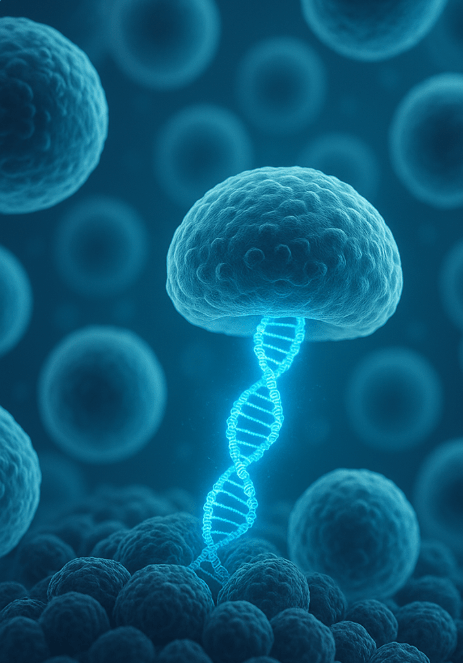
Researchers found that psilocin — the form psilocybin becomes inside the body — may influence the biology of aging itself.
This is surprising because almost all psychedelic research so far has focused on mental health, not cellular longevity, so seeing psilocin affect aging pathways was unexpected.
In the lab, human lung and skin cells treated with psilocin lived 50–57% longer than untreated cells. These cells didn’t just survive longer — they stayed biologically “younger”:
- Telomeres (the protective caps on DNA) were preserved
- Oxidative stress — a major driver of aging — was reduced
- SIRT1, a well-known longevity protein, increased
Then came the animal results: aged mice (roughly equivalent to 60–65 human years) given intermittent psilocybin showed higher survival rates — around 80% vs. 50% in untreated mice — along with visible signs of healthier aging, such as improved fur condition.
What Does This Mean?
These findings are preclinical — from isolated cells and mice, not humans — so we cannot claim psilocybin slows aging in people.
But the discovery is still remarkable. A molecule long associated with consciousness and psychological healing may also interact with fundamental pathways of aging inside the body.
Nature loves surprises — and perhaps these mushrooms have been carrying more wisdom than we realized.
For now, what we can say is simple:
Psilocybin research just became even more interesting.
As research moves forward, what inspires me most is the reminder that healing can be both ancient and evolving. Nature still holds mysteries — and sometimes, they appear in the most unexpected places.
References
Kato, K., Kleinhenz, J. M., Shin, Y.-J., Coarfa, C., Zarrabi, A. J., Hecker, L., et al. (2025). Psilocybin treatment extends cellular lifespan and improves survival of aged mice. npj Aging, 11, Article 55. Published July 8, 2025.
https://www.nature.com/articles/s41514-025-00244-x
 Holistic Wellbeings
Leave a Reply