
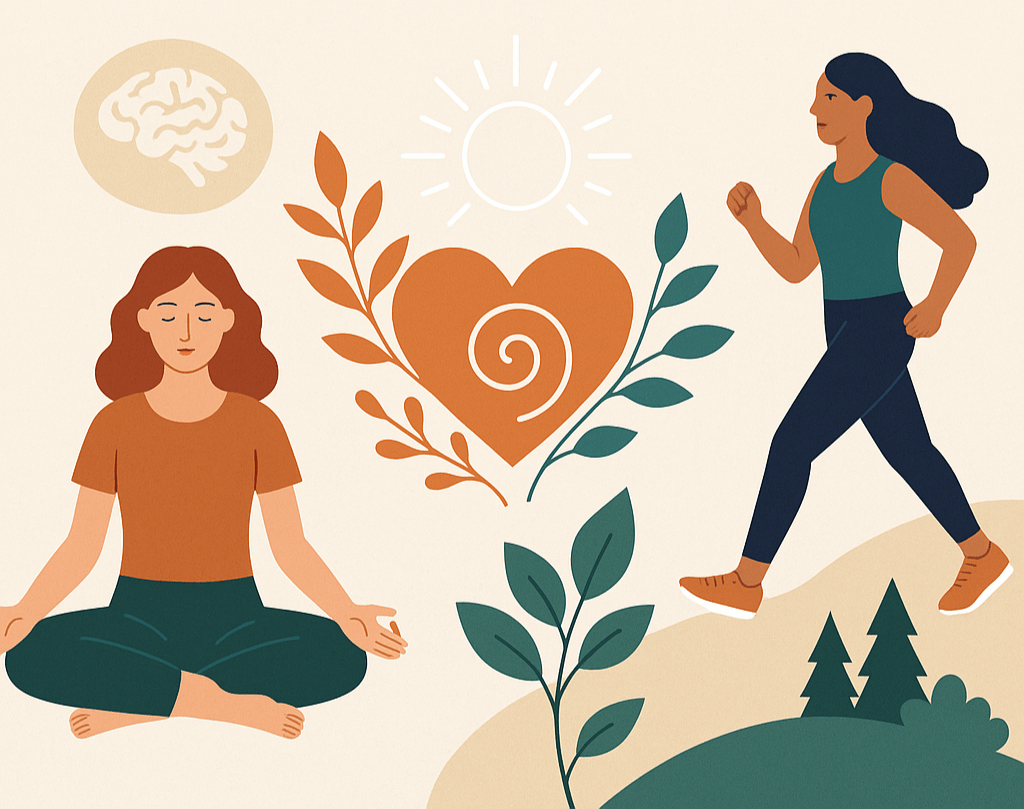
A Holistic Approach to Emotional Fitness, Inner Clarity, and Psychedelic Integration
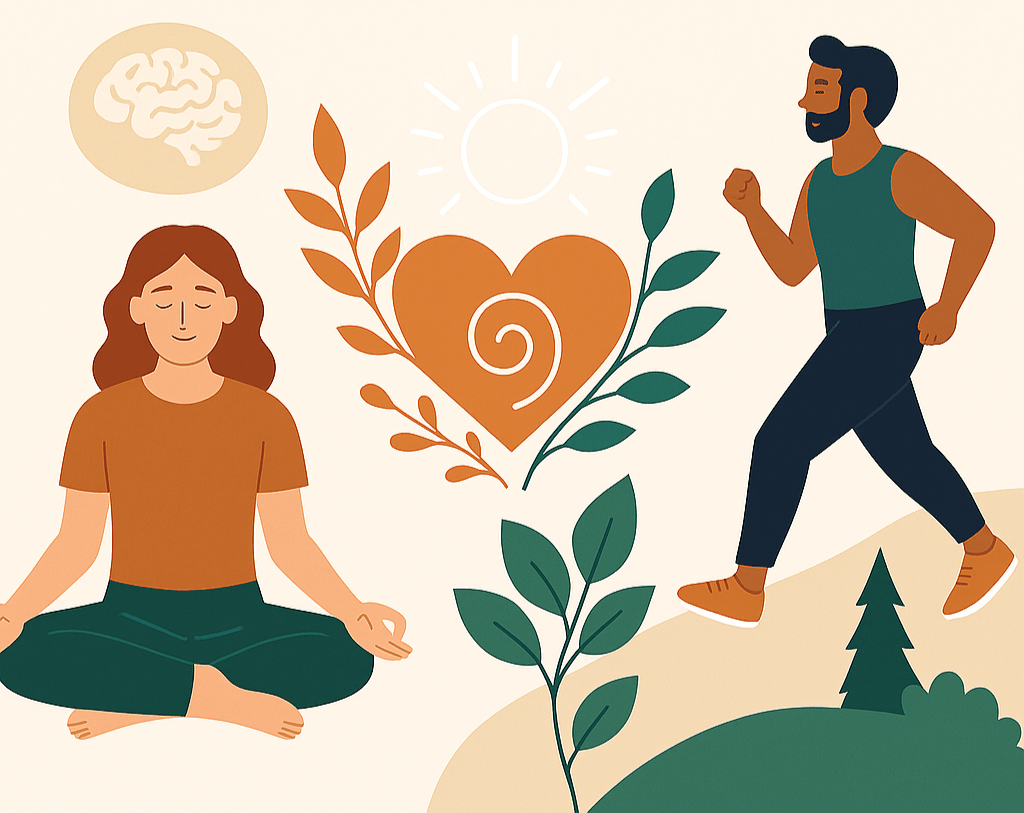
Almost everyone around me exercises their body on a regular basis. Whether it’s hitting the gym, going for a run, practicing yoga, or dancing, physical health is widely recognized as a core part of our well-being. We wear smartwatches to track our steps, monitor our heart rate, and set fitness goals. And rightly so, our bodies need movement, strength, and care to thrive.
But what about the mind? What about the spirit and the soul? What does that actually mean?
In our culture, there’s still a gap in how we value internal practices, those quiet, often invisible acts of self-care that help us cultivate emotional resilience, spiritual depth, and authentic connection. Just as the body becomes stronger and more flexible through intentional movement, the mind and spirit evolve through regular, conscious practice.
Practices like meditation, journaling, deep listening, conscious communication, breathwork, or simply spending time in nature are not luxuries; they are necessities. They help us stay grounded in an overstimulated world. They shape how we relate to ourselves and others. And they deepen our sense of purpose and presence, something that becomes especially evident in the work with psychedelics and expanded states of consciousness.
In this article, I want to explore why inner training is just as vital as physical exercise, and how cultivating emotional intelligence, empathy, presence, and spiritual awareness can transform not only your well-being but your entire way of relating to life.
Mind, Body, Spirit & Soul: A Holistic View of Wellness
We often speak of “wellness” as if it lives solely in the body, measured in strength, flexibility, or energy levels. But true wellness is a dynamic harmony between the body, mind, soul, and spirit. These four are not separate; they are in constant conversation with each other.
- The body stores memory and trauma.
- The mind interprets and narrates our experience.
- The spirit connects us to meaning, values, and something greater than ourselves.
- The soul holds our deepest essence, our passions, purpose, and the quiet truths of who we are beneath all roles and stories
While spirit connects us to something greater, the soul brings us inward, to our unique essence, creative spark, and inner truth.
When one of these areas is neglected, it inevitably impacts the others.
For example, someone might appear physically fit on the outside, yet feel disconnected, reactive, or emotionally numb. Without developing presence, introspection, and emotional literacy, we risk becoming “strong machines” rather than integrated humans. Likewise, someone deeply immersed in spiritual or intellectual pursuits without grounding in the body can lose touch with reality, community, or even self-care.
This becomes especially clear in psychedelic work: the insights and healing accessed during a journey are only as impactful as our ability to embody them in daily life. That means tending to all three aspects of the self, not just the one we’re most comfortable with.
Daily Inner Practices to Build Mental and Emotional Resilience
Daily Inner Practices to Build Mental and Emotional Resilience
Just as you wouldn’t expect physical strength without regular movement, you can’t expect emotional clarity or spiritual insight without consistent inner practice.
These practices don’t need to be dramatic or time-consuming. What matters is presence and regularity:
- Mindfulness meditation helps us witness thoughts without being ruled by them.
- Journaling creates space to process and integrate emotions and insights.
- Conscious communication teaches us to express truth without harm and truly listen.
- Breathwork and nervous system regulation help us stay grounded under stress.
- Spending time in nature reconnects us to larger rhythms and perspectives.
- Creative expression (writing, drawing, dancing, music, playing an instrument) opens non-verbal channels of the psyche.
- Gratitude or intention-setting rituals ground the spirit in meaning and coherence.
Over time, these rituals build what we might call “emotional fitness”, the capacity to stay centered, compassionate, and flexible in the face of life’s complexity.
What Happens If We Neglect Mind and Spirit?
When we neglect our mind and spirit, we may not notice the effects immediately. But over time, something subtle and corrosive can set in: emotional rigidity, disconnection, and a sense of spiritual dullness.
You might experience:
- Tunnel vision – where only your personal goals or fears dominate your reality.
- Reactivity – being triggered easily, without pause or perspective.
- Decreased empathy – struggling to connect with others’ experiences.
- Loss of meaning or burnout – even when outwardly successful.
- Spiritual dryness – where nothing feels sacred, inspiring, or alive.
This isn’t about judgment; it’s simply the natural result of neglect. In psychology, this state is often described as an existential vacuum or a crisis of meaning (Frankl, 1985). Viktor Frankl, a Holocaust survivor and psychiatrist, wrote that “life is never made unbearable by circumstances, but only by lack of meaning and purpose.”
These conditions, burnout, cynicism, and disconnection, are also what drive many people toward psychedelic experiences in search of meaning or a breakthrough. It’s worth acknowledging that for some, these experiences can open powerful doors of insight. But those doors mean little if we don’t know how to walk through them.
It’s our daily inner practice, the grounded, intentional work with mind, spirit, and soul, that gives those insights roots and direction. Inner work is what helps us stay awake in everyday life, not just during peak experiences. It brings us back to integration, presence, and wholeness.
How to Start: Creating Your Own Mind-Body-Spirit-Soul Routine
The best inner practices are the ones that meet you where you are – realistic, meaningful, and adaptive. Here’s a simple way to begin:
1. Choose One Practice for Each Area:
- Body – Movement you enjoy: yoga, dance, walking, tai chi.
(For me, yoga on my veranda balances body and soul. I love ending with meditation and breathing exercises -it feels like a soft landing into the day.) - Mind – A focus activity: meditation, reading, journaling, breath awareness.
(My morning routine includes a body scan – connecting my breath to my physical sensations, feelings, and thoughts. It helps me tune in and meet myself where I am) - Spirit – Something that evokes reverence and connection: prayer, nature immersion, altar work, ritual.
(I love sitting quietly in nature or lighting a candle and incense at my altar in gratitude. These small rituals root me in something greater and help me remember what matters.) - Soul – A practice that aligns you with your essence: music, creativity, inner reflection, and authentic joy.
(Playing my ukulele brings me back to myself. It helps me express what words can’t, always lifts my spirit, and I love the flow it brings me. It’s where I feel most “me.”)
2. Schedule a Daily 15-Minute Check-In
Even 10–15 minutes of conscious reflection, mindful movement, or breathwork can shift your day.
3. Create a Weekly Integration Ritual
Set aside time each week to ask: What am I learning? What do I need to express? What do I need to let go of? Especially helpful if you’re working with plant medicine or deep transformation.
4. Let Your Practice Evolve
Your needs will shift as you grow. What grounds you today may change next year. Allow your practices to adapt, like seasons, not checklists.
Final Thoughts
Just as we strengthen our physical body through movement, we can cultivate our inner world, our attention, our presence, and our emotional wisdom through dedicated practice.
We don’t practice the mind and spirit to fix ourselves. We do it to return to ourselves. To be more alive, more present, more in tune with the world around us. In a culture that prizes outer achievement and productivity, going inward is an act of radical wellbeing and deep collective healing.
Whether you’re navigating the integration of a psychedelic journey or simply longing to feel more connected in your daily life, tending to your mind and spirit isn’t a luxury. It’s essential.
If you’re exploring your own inner practices or integrating psychedelic experiences, feel free to reach out. I love walking with others on this path of conscious transformation.
Further Reading & References
- Frankl, V. E. (1985). Man’s Search for Meaning. Boston: Beacon Press.
A powerful exploration of meaning, resilience, and the human spirit. Frankl introduces the concept of the “existential vacuum” and how purpose is central to psychological well-being. - Khoury, B., Sharma, M., Rush, S. E., & Fournier, C. (2015). Mindfulness-based stress reduction for healthy individuals: A meta-analysis. Journal of Psychosomatic Research, 78(6), 519–528.
This meta-analysis supports how mindfulness practices improve emotional regulation, reduce anxiety and depression, and enhance overall mental well-being. - Koenig, H. G. (2012). Religion, spirituality, and health: The research and clinical implications. ISRN Psychiatry, 2012, 278730.
Demonstrates the correlation between spiritual practices and improved mental health, resilience, and life satisfaction. - Porges, S. W. (2011). The Polyvagal Theory: Neurophysiological Foundations of Emotions, Attachment, Communication, and Self-Regulation. New York: W. W. Norton & Company.
Explores how the nervous system is regulated through breath, safe relationships, and embodied practices—essential to emotional safety and connection.
 Holistic Wellbeings
Leave a Reply