What to do when you’re not ready (or not a candidate) for the medicine
Not everyone is meant to walk the psychedelic path — at least not right now.
Maybe you’re dealing with mental health concerns, on medication, or have physical or emotional sensitivities that make the use of psychedelics unsafe. Or maybe something deep inside you just says, “Not yet. Not this way.” That’s okay. You’re not alone – and you’re not without options.
Before diving into alternatives, it’s important to acknowledge that sacred plant medicines – like psilocybin mushrooms, ayahuasca, peyote, and others – have been used for thousands of years by Indigenous cultures around the world. These plants are not “trendy” or recreational for the people who have held their wisdom – they are sacraments, teachers, and powerful allies for healing and spiritual connection when approached with reverence, intention, and proper guidance.
Many modern seekers are drawn to this path, and for good reason – it can be life-changing. But it’s not the only way to access profound inner states. And it’s not for everyone – whether due to health conditions, life circumstances, or simply timing.
The beautiful truth is, you can touch altered states of consciousness – states of deep awareness, ego dissolution, emotional healing, and spiritual insight – through natural, accessible practices you can do safely on your own.
Here are 5 powerful ways to explore non-ordinary states of consciousness – no substances required – beginning with one of the most potent tools we all carry within us:
Conscious Connected Breathing (CCB)
There are many beautiful paths but this breathwork is no joke. I want to focus mostly on Conscious Connected Breathing because it’s a practice I’ve found to be incredibly accessible, potent, and deeply transformative. It requires nothing but your body, breath, and a safe space. It can move stuck emotion, unlock visions, and even evoke feelings of unity or spiritual connection – all through the breath.
What is it?
It’s a circular breathing pattern with no pause between the inhale and exhale. You breathe in fully, and then let it go without controlling or pausing. The breath becomes a wave — smooth, rhythmic, and open.
How to Practice It:
Set & Setting Matter.
Create a safe, quiet space where you won’t be disturbed. Dim the lights, lay down on your back, maybe cover your eyes with a cloth. Music can help – especially something instrumental, tribal, or ambient.
The Basic Technique:
- Inhale through the mouth, full and open – belly, chest, upper chest
- Exhale through the mouth, relaxed – just let it fall out
- No pause at the top or bottom. Keep it flowing.
- Stay relaxed. Let your body move if it needs to.
- Do this for 15–40 minutes.
What You Might Feel:
- Tingling, temperature shifts, emotional waves
- Spontaneous movements, tears, laughter
- A sense of timelessness or “leaving the body”
- Deep peace or energetic release
Important Considerations:
Not for everyone
People with epilepsy, heart issues, schizophrenia, or extreme anxiety should approach with caution. If you’re unsure, talk to a healthcare provider or a certified breathwork facilitator.
Always listen to your body
If you feel discomfort, light-headedness, dizziness, or anxiety, it’s important to ease up, slow down, or stop.
Have a sitter
If it’s your first time, having someone you trust nearby can help you feel safer — especially if strong emotions arise.
Stay grounded after
Drink water, journal, walk in nature. Don’t rush back into daily life. Integration is key.
Other practices
That said, breathwork isn’t the only route to altered states. I’ll also briefly touch on four other practices you can explore:
Meditation & Mindfulness
A regular meditation practice can absolutely take you to altered states – but it’s more of a slow burn. Over time, you start to dissolve the borders of your thoughts and ego. Sometimes, without warning, you drop into a state of presence so deep it feels like you’ve left the known world.
Try this: Sit in stillness for 20 minutes a day. Use your breath or a mantra to anchor your awareness. Eventually, you’ll hit a moment where you’re not thinking – you’re just being. That’s the doorway.
Sound Journeys & Frequency Tools
Sound has always been a medicine – and tools like binaural beats, Solfeggio frequencies, and drumming rhythms can shift your brainwaves into altered territory. It’s a form of sonic entrainment – your brain literally syncs to the rhythm.
Try this: Put on theta or gamma binaural beats (headphones required), lie back, and let yourself drift. You may get visuals, insights, or enter a deep meditative trance.
Nature Immersion & Solo Retreats
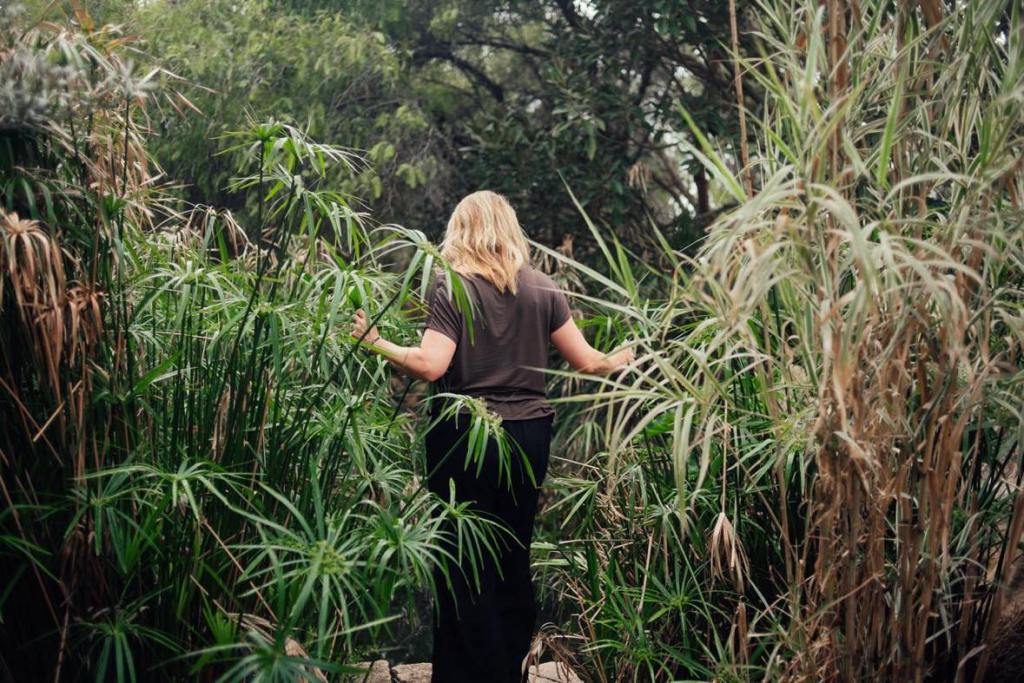
There’s a reason indigenous traditions include solo time in the wild. Being alone in nature, especially while fasting or in silence, strips away distraction and brings you face to face with your deeper self.
Try this: Spend a day alone in nature. No phone. No book. Just you, your journal, and the forest. You’ll be surprised what bubbles up when the noise stops.
Movement & Ecstatic Dance
I absolutely love this one and do it every week. And yes, trance states live in the body too. Dance, when done without ego or performance, can lead to emotional catharsis, spiritual ecstasy, and loss of the “self.”
Try this: Put on a playlist that slowly builds (check out ecstatic dance sets on YouTube or Spotify), close your eyes, and let your body guide you. Move as if no one is watching – because no one is.
A Gentle Reminder
Each of these is a doorway – and you may find that one resonates more than others. The point is: you have options.
Psychedelics may be powerful tools – but they aren’t the only doors to the soul. Your breath, your body, your stillness, your sound – these are sacred keys, too.
So, if the medicine isn’t right for you, trust that. And try one of these practices instead. Go deep. Go slow. And listen to what shows up.
Because ultimately, altered states aren’t about escaping life.
They’re about remembering what you already are.
 Holistic Wellbeings
Leave a Reply